

Router Bit Types and Basics – Common Types of Router Bit
Seeing just how many different types of router bits there are can be overwhelming, especially when you are trying to know which one you should use for the woodworking project you’re doing.
That’s why we’re here. We’re here to take the difficult part out of deciding which router bit you should choose for the specific application you need.
These are the most common router bit types with a guide to help you understand when you should use them.
The Most Common Types of Router Bits
Straight Router Bits
Straight router bits are used when you need to cut a groove or slot into a piece of wood. This is called cutting a dado, and this type of cut should be made when you need to create an inlay in a piece of wood for securing a shelf onto a bookshelf or cabinet.

With a straight router bit, you can cut a through dado or a blind dado into the wood. A through dado is a cut in the wood with the straight router bit that will run all the way through to the other side of the surface. A blind dado will end before the cut reaches the edge of the surface.
When you need to cut a dado into a piece of wood, a straight router bit will be the right router bit for the job.
Rabbeting Router Bits

When you need to adjoin two pieces of wood together through a tongue-and-groove method of connection, you will want to use a rabbeting bit. A rabbet router bit will cut a recess out of each piece of wood. Then, the two pieces of wood will be adjoined together through the rabbets that were created with the rabbet router bit.
Chamfer Router Bits
Chamfer router bits are also known as 45-degree router bits. They are used when you want to cut a 45-degree angle to make a bevel or angle in the material you’re cutting. Chamfer router bits can also be used for smoothing out the sharp corners that occur when joining two pieces of wood together. They are best used for working on cabinets, tabletops, and shelves.
Flush Trim Router Bits

Flush trim router bits do exactly as their name implies; they flush the edge of one material with the edge of another material to make it one flush piece. They can also trim any excess or overhang of material to make the pieces flush together smoothly as well.
Edge Forming Router Bits
Edge forming router bits contain many different types of specialized router bits that we will get to in a moment, but first, let’s go over what edge forming routing bits are.
An edge forming router bit is used to cut a decorative edge into a piece of material. This can include chair legs, table edges, cabinet doors, and picture frames, just to name a few.
Edge forming router bits will fall into one of these categories: round-over router bits, Roman Ogee router bits, edge beading router bits, or cove router bits.
-
Round-Over Router Bits
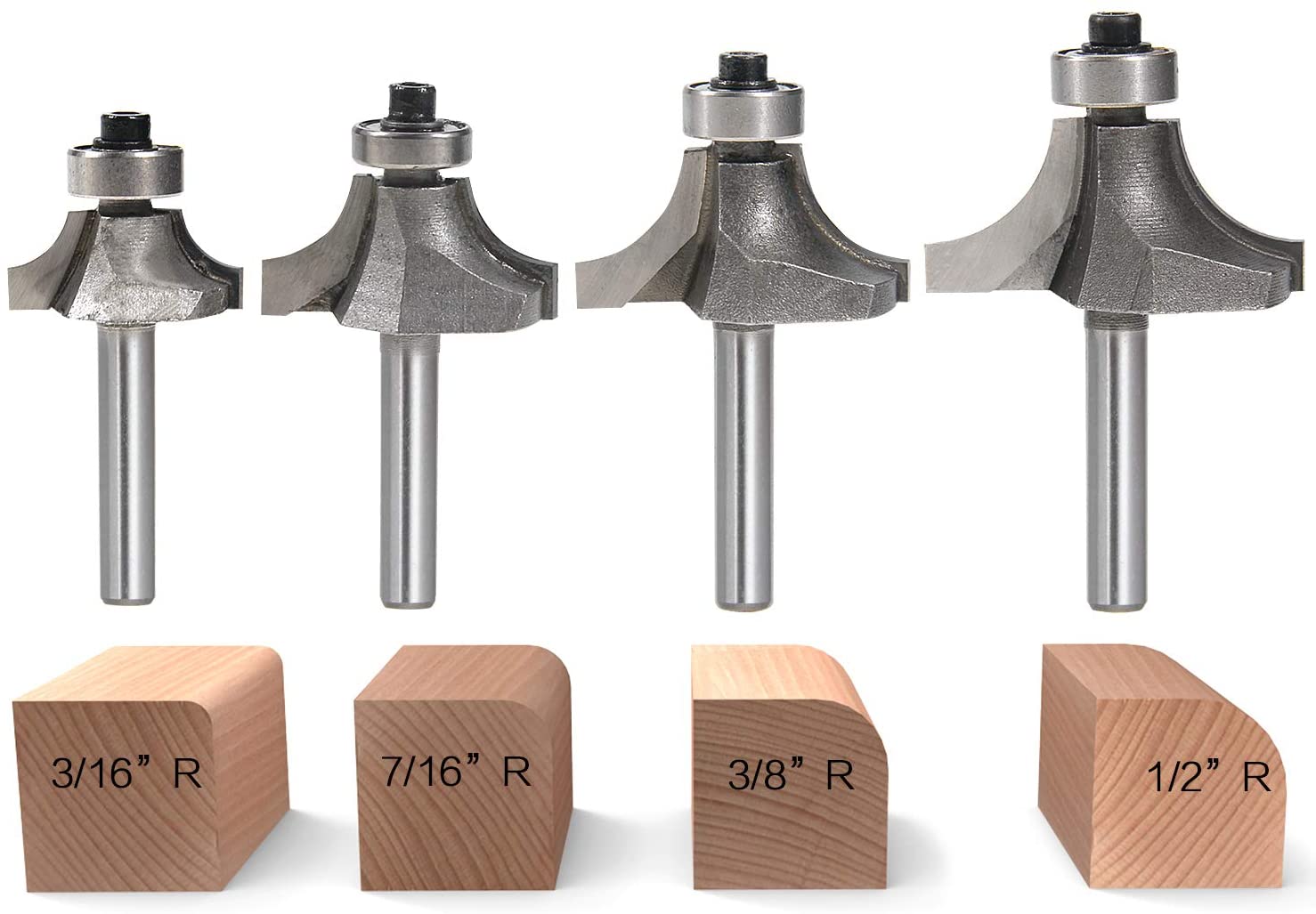
Round-over router bits should be used when need your project to have rounded edges. This is a method of smoothing out the edges of the wood to create a round appearance. Using a round-over router bit will ensure that the edges of your project have a rounded design rather than a jagged or pointed edge.
-
Roman Ogee Router Bits

Roman Ogee router bits are the best for creating elaborate details in the wood. If you are working on a project that requires elaborate designs in the surface, legs, or arms of the project, then the Roman Ogee router bit is the best one you should choose.
-
Edge Beading Router Bits
The edge beading router bit should be used when you want to carve out a beaded edge into the wood you are working on. This is best for chair rails or stair rails, as it will take the solid piece of wood and add a designed beaded edge to the flat surface.
-
Cove Router Bits

A cove router bit is shaped with a rounded head that will create a concave circle into the material. Cove router bits are often seen to carve out the edging of table legs, chair legs, chair arms, handrails, and cabinet doors.
Things to Consider When Choosing a Router Bit
Before getting started, you need to know the size of the router bit you will be using for the application you are using it for. You will also need to understand the difference between choosing a large router bit and a small router bit set.
A large router bit will create wider cuts in the wood that you’re cutting. This means if you choose a ½” diameter router bit, you will be cutting more material out of the wood than you would be if you chose a ¼” diameter router bit.
The project you are working on will help you determine what size router bit you should choose.
You also need to think about the project in which you will be using the router bit. Will you be making a table that requires intricate designs carved into the wood, or are you simply creating a bookshelf that will need basic slots carved into the surface to hold standard shelves?
These are two very different reasons for using a router and will require two very different router bits for the job.
Make sure that you know the type of project you will be doing before you place any router bit onto your router.
Conclusion
No matter what type of woodworking project you take on, having these common types of router bits on hand will guarantee that you can do any wood routing job that comes your way. These are the router bit types and basics that will help you understand which router bit type you should use.