
10 Best Plunge Router Bits for Wood Router Power Tools Every DIY Woodworker Should Own
This post contains affiliate links. If you buy through a link on this page we may earn a commission from qualifying purchases at no extra cost to you.
There are two types of routers you can choose from when adding a router to your woodworking tools. You can choose a plunge router or a stationary router.
A stationary router is a router that is typically mounted onto a router table to stay in the same position and will be set to a specific depth throughout the duration of the project.
A plunge router allows you to plunge the bit of the router deeper into the surface that you are routing, rather than a standard fixed depth.
Today, we’re going to talk about plunge routers and the 10 best plunge router bits that every DIY woodworker should own.
1. Straight-Cutting Bit

The straight-cutting bit is perfect for those times when you need to cut a rabbet, dado, or another type of groove. They come in a wide range of sizes so that you can choose the exact diameter bit that you need for the job. They can be small ⅛” or may go up to ¾” in diameter. They are ideal for cutting the exact size groove you need for making a bookshelf, cabinet, or to connect two pieces to make a door or window jamb.
2. Rounding-Over Bit
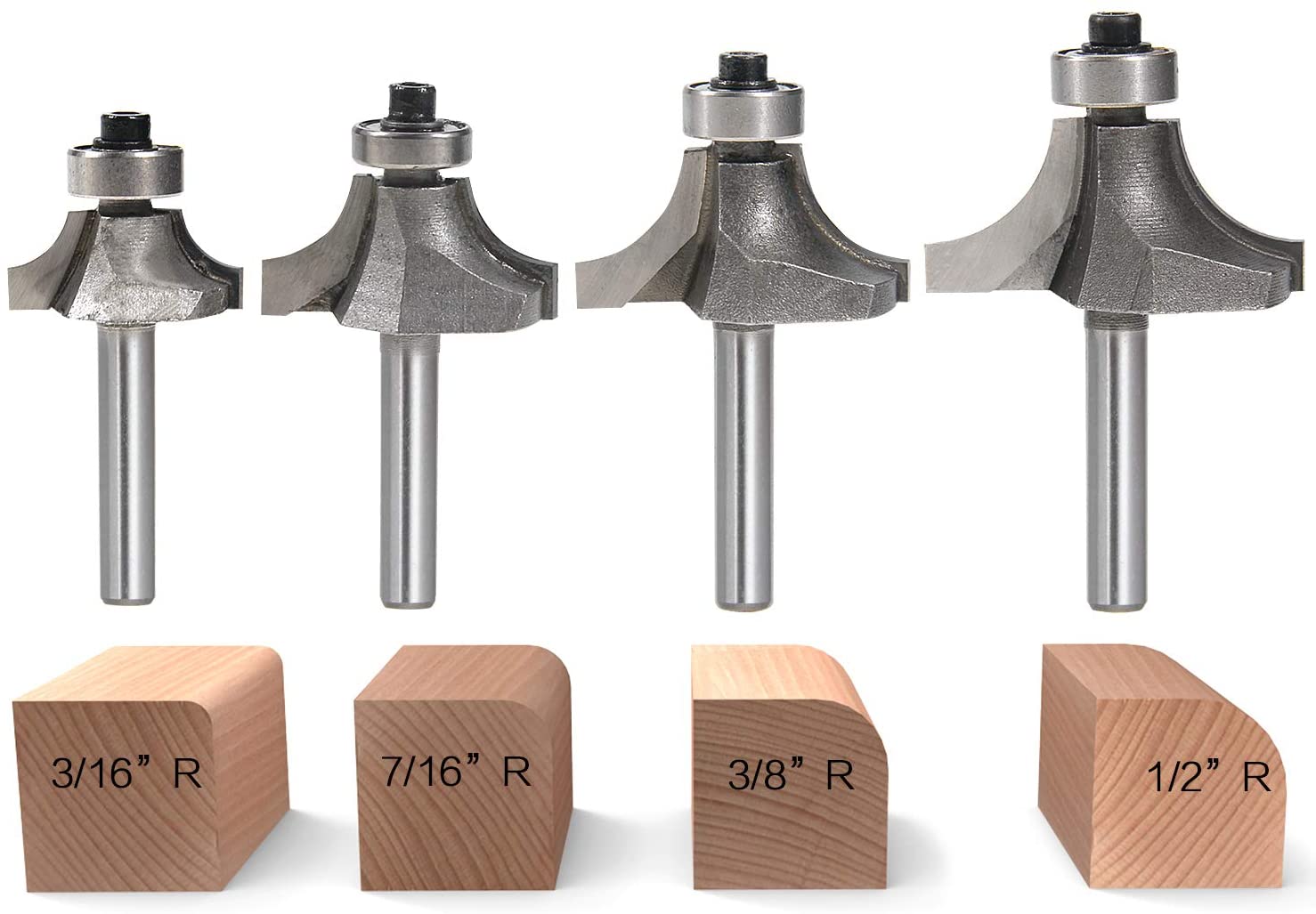
A rounding-over bit should be used when you are making cuts on edges that will need rounded shaping. This includes crown molding, trim, chair rails, table legs, and table edges. This bit will create a round, smooth edge rather than a pointed edge that a straight-cutting bit will create.
3. Cove Bit
The opposite of a rounding-over bit is the cove bit. A cove bit will create a concave indention into the wood that you are cutting. This creates an opposite rounding effect. Instead of the edges of the wood becoming rounded, the inside of the wood is rounded.

The cove bit is best used in applications where you want to create decorative features to the pieces you are creating, such as table legs, chair legs, chair arms, cabinet doors, or crown molding.
4. Roman Ogee Bit

The Roman Ogee bit is one of the most popular plunge router bits because it can create intricate details on the wood it is shaping. The Roman Ogee bit is best for adding decorative designs to woodworking projects like picture frames, handrails, newel posts, stair balusters, and tabletop edges. You should always have a Roman Ogee big on hand for any woodworking project that may call for distinctive and elaborate designs.
5. Slot Cutter Bit

A slot cutter bit is similar to a straight-cutting bit because it is the bit you will need to choose when making grooved cuts for drawers, shelves, or doors. The slot cutter bit will be between 1/16″ and ¼” thick to cut a slot the exact diameter you need for the project you’re doing. The depth of the slot cutter bit is typically ½” thick, although this can be adjusted by changing out the ball bearing pilots of your router.
6. Rabbeting Bit

The rabbeting bit is the best plunge router bits you can use when you are cutting grooves into two pieces of wood that will need to adjoin to one another. Rabbeting is a method that describes cutting two pieces of wood with a groove in each piece of wood that will allow the two pieces of wood to connect securely to one another. The rabbeting bit is the router bit you will need to do this job, and we recommend keeping a ⅜” wide and ½” deep rabbeting bit on hand at all times.
7. Flush-Trim Bit

A flush-trim router bit must be used for those times you are working with cabinets, countertops, and drawer faces. There is no other router bit that will do the job for this application the way a flush-trim bit will. The flush-trim bit will smooth out any overhanging material when installing cabinets, countertops, or drawers. This is what will give the project a smooth and flush finish between each piece of wood.
8. 45-Degree Router Bit

When you need to remove those sharp corners that are created when adjoining two pieces of wood together, you will need to use a 45-degree chamfer router bit. This bit will smooth the sharp corners from the edge of the project you are working on, like shelves and tabletops. You can also use the 45-degree chamfer router bit to create V-shaped grooves on the surface you are working on.
9. V-Grooving Bit

Similar to the 45-degree router bit is the V-grooving bit. The V-grooving bit is used to carve v-shaped grooves into the surface of the wood you’re working on. The v-grooving bit is best used for detailing the surface of doors, table legs, chair legs, and various types of wall paneling. We recommend using a ½” diameter v-grooving bit to make the most detailed carvings in your wood.
10. Core Box Bit

The last plunge router bit on our list of router bits that every DIY woodworker should own is the core box bit. The core box bit cuts rounded grooves into the bottom of columns or vertical posts. It can also be used to create decorative grooves into surface panels, like doors and signs.
Conclusion
With these 10 plunge router bits that we have just described, you can create virtually any type of design for any project you are working on. Keep in mind that these plunge router bits come in different diameters, so it is important to choose the right diameter for the job you’re doing. An easy way to remember this is to remember that smaller diameter bits will create smaller designs, whereas larger bits will create larger designs. This is important because you will likely need to use smaller bits when carving precise designs into the accents of a table or chair, where you will likely need to use the larger drill bit for smoothing out edges.