
5 Essential Portable Planer Secrets – Get the Most Out of It
If you’re woodworking at home for personal projects or work, you may have invested in benchtop planer machines, like a thickness planer or even a jointer planer combo. These are high-quality, professional milling machines, but they can’t move around much. Once they’re in your woodworking shop, they’re pretty much permanently there and are difficult to move around.
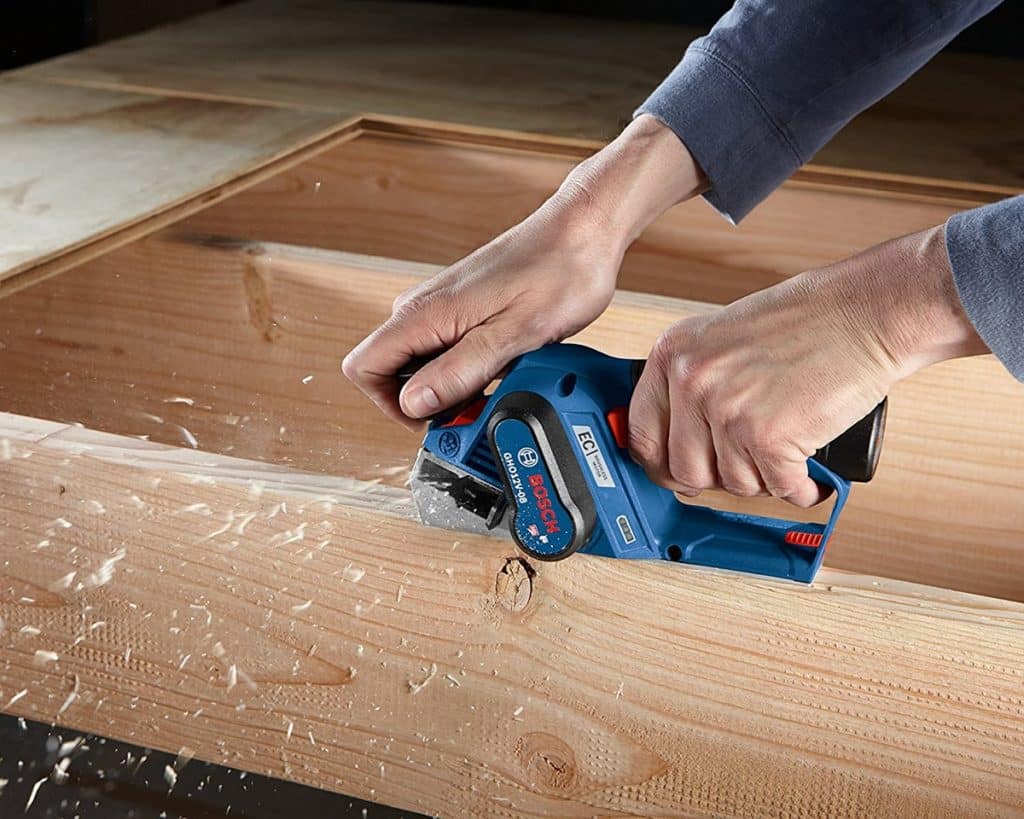
This is where a portable planer can come in handy. A portable wood planer is handheld and easy to carry around, working like a plug, and go mechanism. It can still achieve the same results as a benchtop thickness planer but requires a steady hand and proper technique to get it done.
A portable wood planer can be a great investment for both professionals and beginner woodworkers who are just learning how to use woodworking tools.
You can get the most out of your planer by following a few simple tips and tricks to get the most out of your portable planer.
Keep One or Multiple Boards in Place
If you’re working with a portable planer, it doesn’t offer the same amount of steadiness that a benchtop thickness planer does. A quick and easy way to make sure your wood board stays in place is to put something under the board you’re working with.
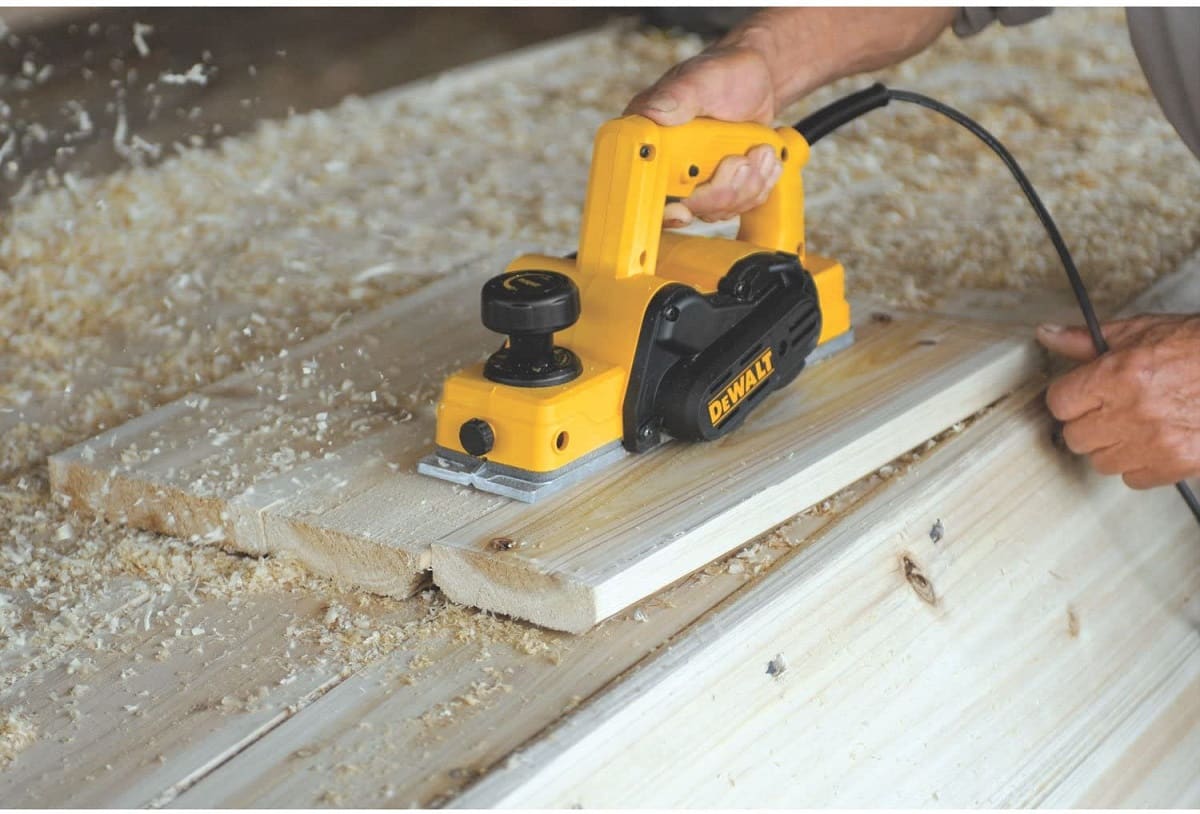
Work on a flat surface, preferably a workbench or tabletop surface that’s flat and even and put down a cloth or some type of fabric to make sure the board doesn’t move when you’re running the portable planer over it.
A portable thickness planer will make a wood board parallel so that it has the same thickness across. If you have a piece of wood that’s uneven, a thickness planer will run your wood board through and cut through it, making it straight and parallel all the way across.
If you have multiple pieces to run through a thickness planer, you can run a few vertically. Use a strong piece of tape to stick together a few pieces of wood, set your planer, and run the planer over the wood. The tape will keep it running through stable and straight, and you can save some time when working.
Run Short Boards Through Your Planer
A planer generally won’t run a small wood board through it, since you can’t physically reach through and feed it. To feed a short board through a portable planer, use two long pieces of wood that have the same thickness as your board, and use them as a shepherd on either side of the shorter board and run it through the planer. Tape the pieces together to ensure it stays in place. Run your portable planer overtop, and all your boards will stay in place.
Treat Each Piece of the Board Equally
Plane once across the whole board and do all of your passes equally. If you run three passes on one side of the board, do three passes on all sides of the board.
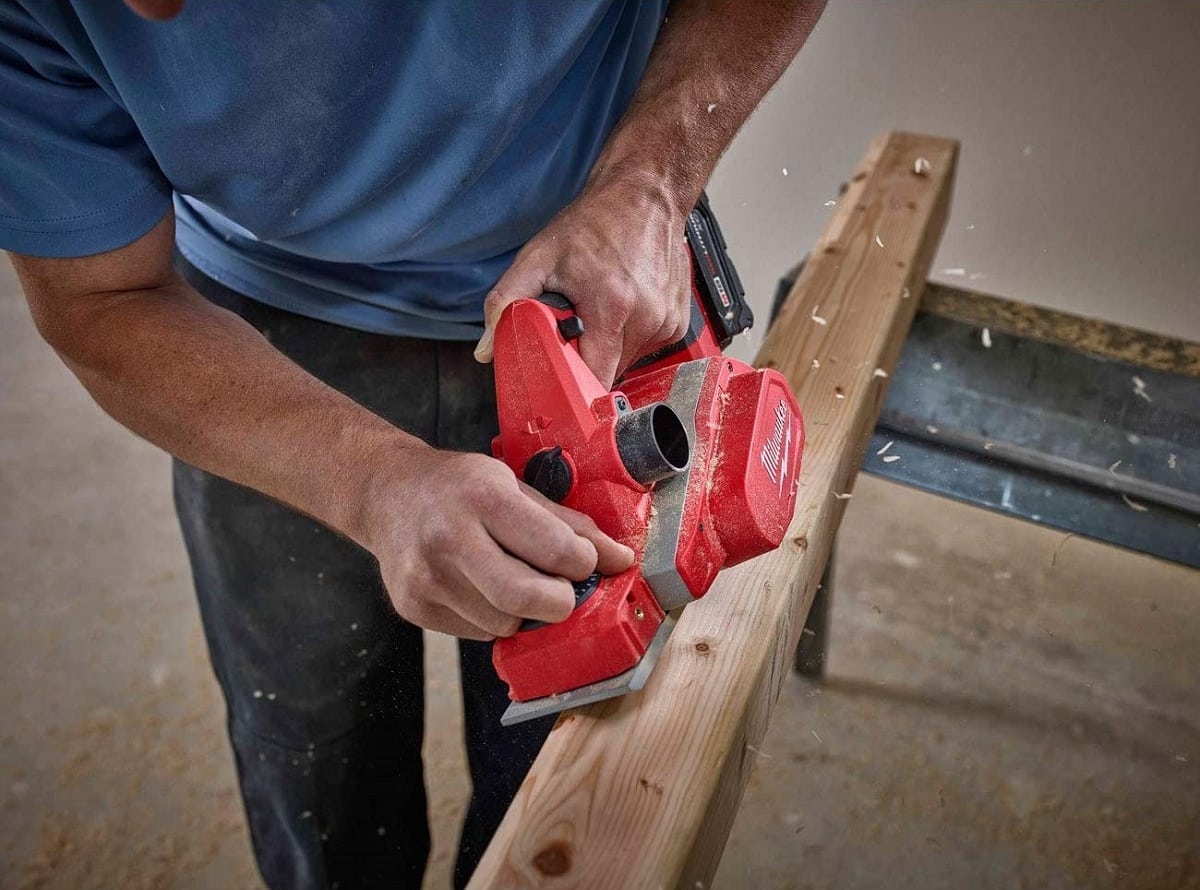
If you have to sand any piece of the board, sand the entire board equally. One area of the board can’t be sanded because this will make it less uniform and harder for you to work with.
As well, whatever the grain of the wood is, keep your passes even on both sides of the board and plane with the grain.
It’s important that whatever you do to any side of the wood, it’s equally treated throughout. This is that step that can make your piece go above and beyond with that extra bit of perfectionism.
Avoid Dips On the Edges
When you’re running your planer over the wood board, keeping a steady hand is key. When the planer makes it to the edge of the board, it’ll try to make a dip at the end of the wood, and this can mess up the uniformity and thickness of the board.
To avoid this, quickly lift your planer before the end so that it doesn’t cut off the edge. Practice with scrap wood to perfect this skill, because it needs to be done quickly and at the right moment so that the wood stays even and none of the edge is cut off.
For Long Boards, Walk with the Planer
If you’re working with a long board, it can be easy to mess up and not achieve a parallel board from end to end. A benchtop planer is extremely useful for this since the machine will run through the wood by itself in one stable motion and get the front face and the bottom face of the wood parallel.
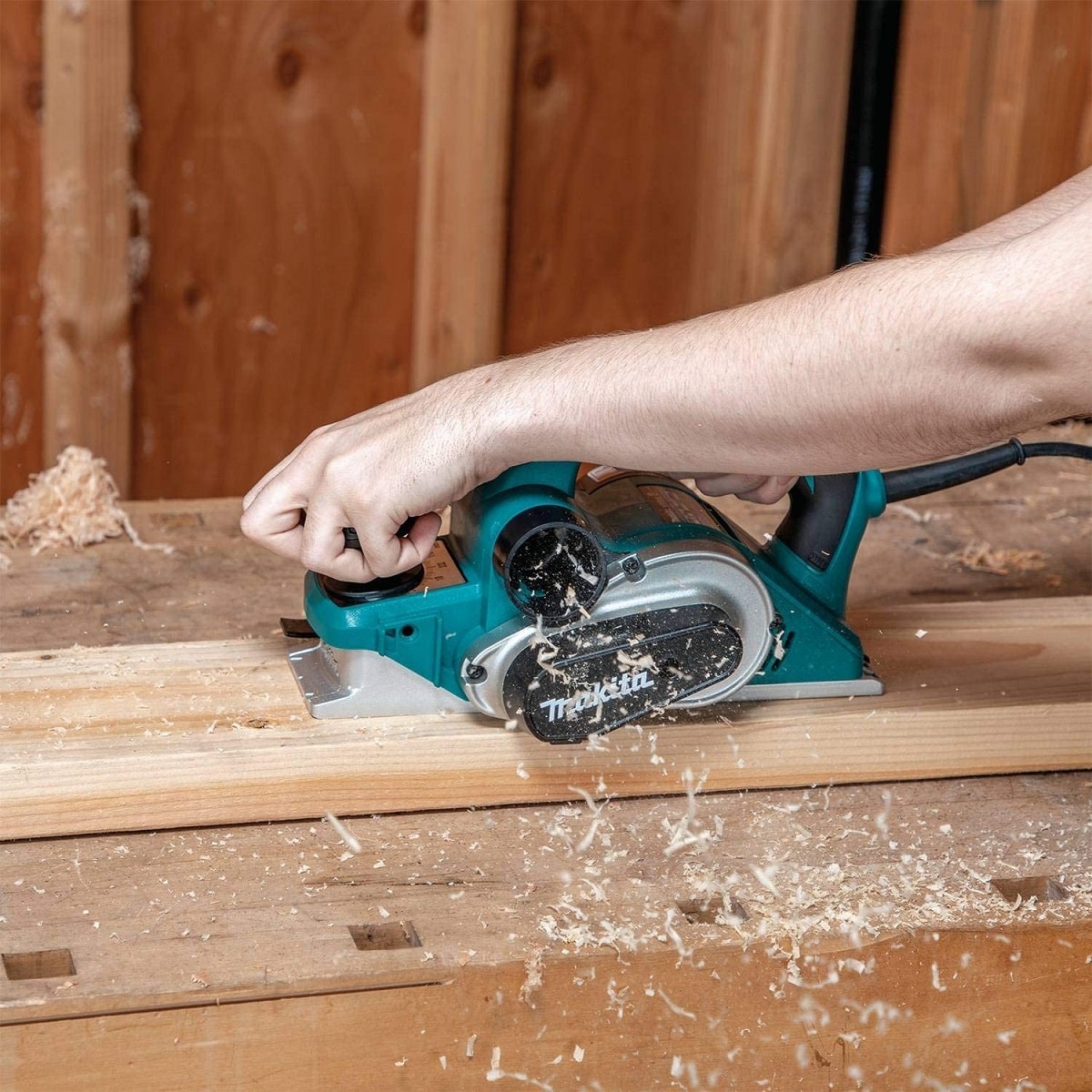
However, there is a way to make the cutterhead of your portable planer run smoothly over a long board, and the answer is in your technique and physical stance. Have your arm and the handheld planer parallel to the board and walk with the planer while you’re doing a pass. This will ensure that your blade is going across the entire wood board evenly.
Do not stretch to reach the end of the planer. Not only is this dangerous, but it also won’t help you achieve uniformity. A stroke with the planer is more straight and uniform if you keep your arm straight and walk with the planer, keeping your arm in the same position throughout. If you stretch your arm back and forth instead, the angles of your hand and arm aren’t equal at the beginning or end of each pass.
Final Thoughts on Portable Planers
Whether it’s a thickness planer or a benchtop planer, wood planer machines can be portable and can serve a variety of purposes and uses. Woodworking projects can be brought to a professional degree by perfecting the thickness and flat, straight planes of a wood board.
Planing can be done through a benchtop method with a larger machine or handheld with a portable planing device. Make sure you make the most out of your woodworking projects by practicing frequently to master the craft of woodworking and get that perfect wood piece.