Sliding Miter Saws: Finding the Best Compound Miter Saw
The DEWALT DWS780 is the best sliding compound miter saw for most shops: a 15-amp, 3,800-rpm 12-inch double-bevel saw whose XPS shadow line needs no calibration. Pay less and the Metabo HPT C12RSH3 does nearly the same work; spend more and the Makita LS1219L cuts finer.
This post contains affiliate links. If you buy through a link on this page we may earn a commission from qualifying purchases at no extra cost to you.
The 12-inch slider market thinned out considerably over the last few years. Several of the saws that dominated these lists in 2019 — Bosch’s GCM12SD, the Milwaukee 6955-20, Delta’s Cruzer — are no longer stocked as new units, and chasing a discontinued model through third-party sellers is how people end up paying list price for a saw with no warranty support. So the four below are the ones you can actually buy, checked against current listings rather than carried over from an older version of this guide.
DEWALT DWS780 — Best Overall
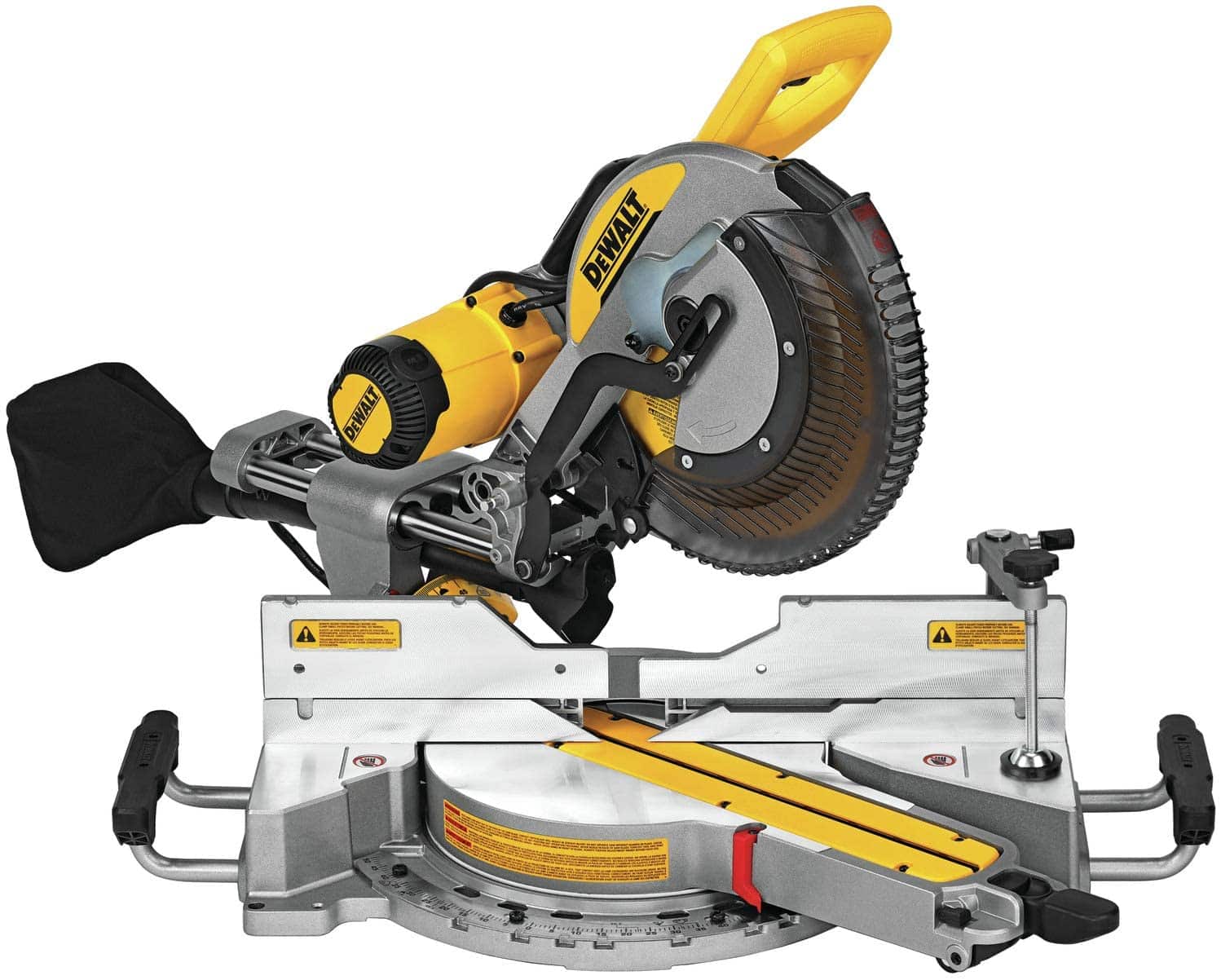
Fifteen amps, 3,800 rpm, 12-inch blade, bevels both directions. On paper that describes half the saws on this page. What separates the DWS780 is the XPS system: instead of a laser you have to sight in and re-sight every time the blade changes, an LED above the blade casts the blade’s own shadow onto the workpiece. The shadow is the kerf. There is nothing to calibrate because there is nothing projecting a guess about where the blade will land.
That sounds like a gimmick until you cut a dozen pieces of trim to a pencil line. Lasers drift. A shadow cannot.
DEWALT claims the dust system captures over 75% of what the blade throws, which in practice means you still want a shop vac on the port, but the bag alone keeps the floor usable. It is the most reviewed saw in this group by a wide margin, which matters less for the specs than for parts availability five years from now.
CHECK LATEST PRICE ON AMAZON.COM
Metabo HPT C12RSH3 — Best Value
Metabo HPT is what Hitachi’s power tool division became, and the C12RSH3 is the saw we would buy if the DEWALT’s price made us hesitate. It is a genuine 12-inch dual-bevel slider: 4,000 rpm no-load, bevel 45° left and right, miter 45° left and 57° right, nine detent stops.
It also has a shadow-line cut indicator — Metabo calls it Xact Cut — working on the same principle as the DEWALT’s XPS. Two of the four saws here have abandoned lasers for shadows, and that is not a coincidence. The laser was always a compromise.
The 57° right miter is worth a sentence of its own. Most saws stop around 50°. If you have ever tried to scribe a trim piece into an out-of-square corner in an old house, you know why the extra seven degrees is not a spec-sheet flourish.
CHECK LATEST PRICE ON AMAZON.COM
Makita LS1219L — Best for Fine Work
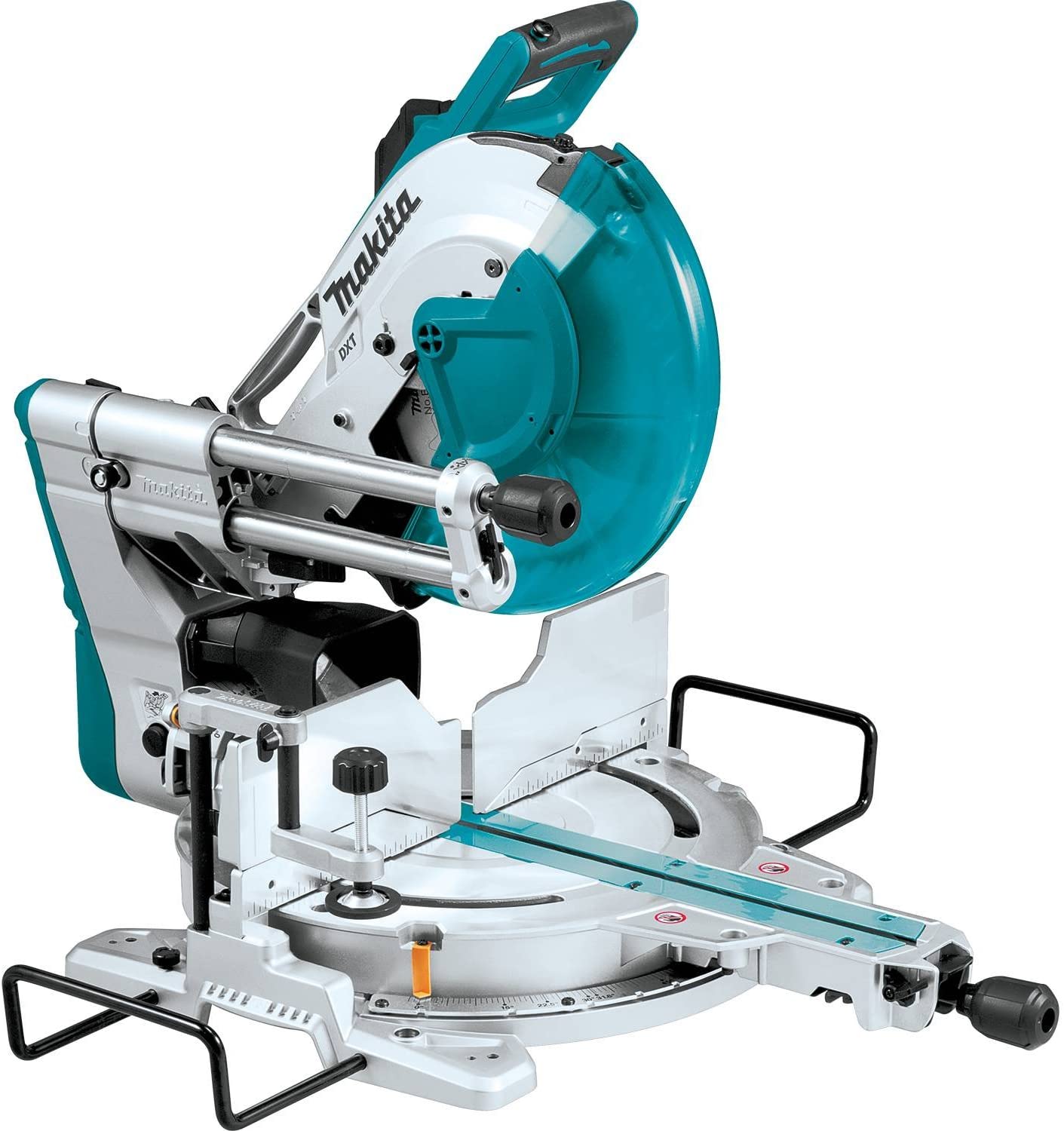
The LS1219L is the most expensive saw on this page by a long way, and it is the only one of the original five recommendations still being sold new. That is its own kind of endorsement.
It is a 12-inch dual-bevel slider with a laser, and the reason furniture makers keep buying it is the slide mechanism: the rails sit behind the fence rather than extending out the back, so the saw can live against a wall and still make full-depth cuts. In a one-car garage that single design decision decides whether a 12-inch slider fits at all.
The trade-off is weight and bulk. This is not a saw you carry to a job site twice a week.
CHECK LATEST PRICE ON AMAZON.COM
SKIL MS6305-00 — Cheapest Honest Slider
A 10-inch dual-bevel slider for roughly a quarter of what the Makita costs. The compromise is capacity, not accuracy — a 10-inch slider will cross-cut wider stock than a 12-inch saw with a fixed head, so the blade diameter matters less than the rails do.
Worth knowing before you click: the main listing has been filling from Amazon Resale stock, with a dozen-odd other sellers behind it. Check what condition you are actually buying.
CHECK LATEST PRICE ON AMAZON.COM
What Actually Matters When You Buy One
Sliding or fixed
A fixed compound saw pivots and bevels but only chops straight down, so its crosscut width is capped by blade diameter. A slider rides the head along rails and roughly doubles that. If you cut shelving, stair treads, wide trim or anything over about 8 inches, you want rails. If you only cut 2x4s and baseboard, a fixed saw is lighter, cheaper and holds its settings better. Our chop saw and miter saw comparison covers the terminology mess that surrounds all of this.
Ten inches or twelve
Twelve-inch saws cut deeper — crown moulding nested at the fence, 4×4 posts in one pass. They are also heavier, pricier, and their blades cost more and deflect more. Ten-inch blades spin faster, run truer and are cheaper to replace. Buy 12 inches for depth of cut, not for the number.
How much room is behind it
This is the spec nobody lists and everybody regrets. Conventional sliders need rear clearance equal to the slide travel, so a saw rated for a 12-inch crosscut may need a foot of empty bench behind it. Compact and rear-rail designs — the Makita here, Bosch’s discontinued axial-glide saws — keep the mechanism within the footprint. Measure your bench before you choose, because no amount of motor makes up for a saw that cannot sit against the wall.
Laser, shadow, or neither
A laser projects a line where the manufacturer predicts the blade will cut, and it needs re-aligning after a blade change and whenever the saw gets knocked. A shadow line puts an LED above the blade and lets the blade cast its own silhouette, so the indicated line is the actual kerf by definition. Both the DEWALT and the Metabo use shadows now. Given the choice, take the shadow.
Cordless, honestly
Battery sliders have arrived but the 12-inch dual-bevel cordless market is still thin, and the ones that exist cost as much as a corded saw plus batteries. If the saw lives on a bench near an outlet, corded is the better buy in 2026. Cordless makes sense when the saw moves to where the work is — decking, framing, fencing — and then a 7-1/4 or 10-inch model usually serves better than a heavy 12.
So Which One
Most people should buy the DWS780 and stop reading. If the budget is tighter, the Metabo HPT C12RSH3 gives up very little and gains seven degrees of right miter. If you build furniture and your tolerances are measured against a dial indicator rather than a pencil line, the Makita earns its premium. And if you have never owned a slider and want to find out whether you need one, the SKIL costs little enough to answer that question honestly. For the fixed-head alternative, see our guide to the sliding compound miter saw category overall.